Showing posts with label tack. Show all posts

Monday, October 13, 2014

Tack Changes – Moving to a Myler bit

Copper used to have a really simple set up gear-wise, but recently I have made a few rather expensive purchases to change his tack arrangement.


Myler-Bit - Myler bit upgrade -


While I do feel a little silly about this, I think this is a good thing, and I’ll explain why.

First off – I have a “Simplicity and solid training is the foundation to all effective horsemanship” kind of view.  I don’t like following tack trends, or using certain pieces of equipment just because such-and-such famous horseperson said I need too.  *coughParellicough*

So ‘upgrading’ Copper’s tack can sort of feel like I’m buying into the “My pony is sooo shuper shpeciallll! He needz all the fahancey matchy tack and polos or he can’t jumps/dressage/hacks, etc…” thing that seems to happen a lot out in internet land. 

But there’s another part of me that recognizes that the cheapest isn’t always the best kind of simple, and sometimes you get what you pay for.

For instance – Copper’s bit. There was nothing inherently wrong with it, but it was not the best bit for my horse.


French-Link-Snaffle - Copper’s old bit; Loose Ring French Link Snaffle with a thick middle link -


I used to ride him in a basic Loose Ring French Link Snaffle – (Joey used to ride in a French Link Eggbutt Snaffle, but when I tried that on Copper he hated it) and I can’t remember why I got the idea that I should try a different bit, but I did.  I think somewhere along the way it finally clicked that Copper has a super thick tongue – lift up his lips and his tongue is bulging over his bars type thick – it completely fills his mouth. I was reading that in that kind of situation, a thinner bit is often more comfortable for the horse than a thicker bit. 

This was a new idea for me – I’ve always thought that thicker bits were softer and gentler that thinner ones – which is true, if your horse doesn’t have a thick tongue!

And what’s more, a shaped mouthpiece is even better for conforming to the shape of the horse’s mouth and not causing undue pressure across the roof of the mouth, tongue or bars. So that’s how I ended up looking at a Myler bit. 

I read a lot of stories about how good a Myler bit was for so-and-so’s horse, and I was drawn to the thinness and shaping of the mouthpiece initially. Then I was talking to the tack shop assistant and found out that purpose of the Wide Barrel Loose Ring Comfort Level 1 Myler Snaffle design sounded like just the thing for Copper. The shifting of the loose ring combined with the rolling action of the barrel joint is engineered to help to ‘destabilize’ the bit, making it harder for your horse to lock his jaw against the mouthpiece and lean on it.

Since Copper has a strong tendency to either lean, or curl up above or behind the vertical (which locks up his neck, his shoulders, his back, and you get the picture!) I was hopeful that the new bit would help soften him enough to get his listening to my aids rather than just ignoring me. (More of the trials and tribulations of retraining an ex-trotter…)

Wonderfully enough, this has been the case.

Copper liked the feel of the new bit in his mouth from the very start and was a lot softer through his mouth, jaw and poll when I picked up contact. I also quickly discovered that when he did start boring down on my hands in a trot, I could wiggle one rein to get his attention and stop him from trying to lock his jaw around the bit and take charge.

It took a few repetitions, but he soon figured out that leaning wasn’t going to work any more. From then on, our trot work has continued to improve consistantly.

I’m able to take up a steady contact with his mouth that he is much more receptive to – probably because he is much more comfortable in his mouth now. The bit has stopped becoming a point of battle for us – he can’t use it to take charge any more, so he’s stopped arguing over it with me and has become much more accepting of my rein aids.

I’m glad I’ve found a bit that is more comfortable for him, and I know for us, the Wide Barrel Loose Ring Comfort Level 1 Myler Snaffle has certainly helped to dispel tension and leaning problems.


Loose-Ring-Myler-Comfort-Snaffle - Copper’s new bit; The Wide Barrel Loose Ring Comfort Myler Snaffle -


I can finally focus on riding the back of the horse, and leave his face alone! (Which I was trying to do before, but it was really hard when Copper would make our rides into a discussion of who was controlling the speed of our gaits, and which gait we were going at - all through locking his jaw either on the bit, or against the straps of a Dr. Cook’s bitless bridle!)

While I could go into all the ins and outs and discuss why I continue to ride with a bit when Copper obviously didn’t like it in the past - even if he is more accepting of it today - I think that’s really another topic for a different post all together.

So that’s the conclusion to Part 1 of my posts reviewing Copper’s tack changes, and the biggest part too. Part 2 will be looking at his new girth and breastplate. And that’s really it for now. So maybe it’s not all the fancy like I was thinking.  Certainly not by tack-ho standards.  ;D

See ya,

bonita

Disclosure: I am not affiliated with the Myler Bit company – I bought this product and chose to review it because I like it. All opinions expressed about the product are my own.

Thursday, June 26, 2014

New Saddle


Uh - I actually bought a new saddle in, like, November 2013!

lil-wayne-money

- And this is what I felt like walking into the store when the shop girl said “How can I help you?” and I’m all “I want to buy a new saddle.” …Got swag yo! - 

I forgot to blog about it, but it is an important “Duh!” moment, so I thought I'd come back and write about it now.

It all started when I decided to get out a saddle fitter, back when I couldn’t figure out whether my saddle didn’t fit me properly, or it just was the wrong saddle for what I was wanting to achieve. I wrote a bit about it here, in a huge dump where I was trying to figure out how to improve my seat.

Saddle fitters are expensive, btw - $85.00 per session! – but I figured it was worth it. And it was, even when she looked at my saddle, and the first thing she said was “Uh oh.”

Well, maybe not exactly, but close! The CAIR air panels (which this saddle had instead of traditional flocking) - were in a word – toast.

The back panels were completely flat, and the front panels had only a little air in them, but were definitely past their use by date. No wonder I felt like my saddle had been tipping me backwards!

Plus, the front of the gullet had cracked across the arm, and she wasn’t sure how safe it was any more. Which meant I was potentially looking at replacing the entire tree, as the gullet and tree are cast all as one piece.

Yup, that’s pretty much the entirety of my saddle’s innards being pulled out and replaced. All for the sum of $600.00 or so dollars. Ouch!

Add to the fact that it’s a 16 1/2” seat rather than the 17” she thought I needed, and that I can buy a new saddle with the changeable gullet system as well as extra flocking shims for $899.00.  Or I could wait around and try to find a second hand saddle.

But the thing was I had to spend money either way, and I really didn’t want to pay $600.00 to fix my old one, only to find out that it didn’t fit me. Or the horse!

Octavia Shut Up

Apparently Wintec has redesigned their saddle trees to fit the wide-sprung barrel that the majority of horses have now a days. It makes sense; new breeding types, new shape for most horses and a new saddle design is needed!

Because Copper is most definitely widely sprung through his barrel, I had my suspicions that a new saddle would fit him better as it always looked like my old saddle was too small on his back.

It really came down to a simple choice – buy a new saddle, or find a second hand one.  

Second hand saddle buying is difficult in Australia, no one really sells on consignment, so you pretty much have to buy the saddle and hope it fits unless the seller is really nice and will let you have a trial. That doesn’t happen very often though. It is a rather difficult process that I didn’t want to put myself through. And in the end, I really didn’t want to wait around to save myself only a couple of hundred dollars, especially when the gullet system and shims that I would get for free with a new saddle were worth a couple of hundred dollars by themselves.

I used the money that I got from selling Joey, even though that was earmarked for The Perfect Dressage Horse fund. And when you sell an equine friend, why does it always feel like blood money? Or is that just me? 

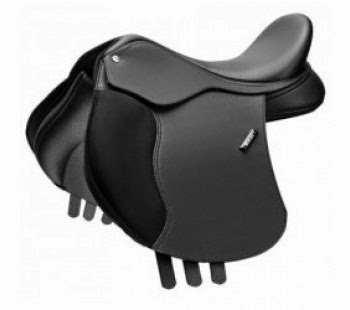
I needed a saddle though, so I bought a Wintec 500 All Purpose saddle.

Wintec 500

And oh my word, has it ever made a difference!

Copper moves much more freely over his back, which is hardly a surprise. I’m not fighting maintain my position any more, and we generally have a much more harmonious ride.  It’s much easier to get Copper to relax and soften now in his trot and I think he is generally much happier to work.

I had previously noticed that Copper had some white hairs coming up through his coat on his back – indicative of nerve damage, and the positioning of them makes sense now, because the seam where the panels overlapped would have been pressing on his back and causing pain.

I am annoyed with myself that it took me so freakin’ long to figure out that his saddle was a problem, but I am glad I did. I now know that CAIR panels have a life span of 10 years, and then they need to be replaced. They may need to be replaced sooner, but it is hard to tell that when you look at them.

Even my completely-flat-as-paper-thin panels felt firm when you poked them or touched them.  To test their actual structure, you need to turn the saddle over and massage or knead the panels with your fist for five minutes or so. If the panel is still firm, then it is ok. If it is no good you will find that it is flabby, saggy, or in the case of my saddle, has no air left in it at all.

I was so surprised when I saw that, but I finally understood what was going on and why it took me so long to work out the problem. Basically, the saddle looked and felt fine, but after five minutes of sitting in it on Copper, the air would have squished out, and the tree would have been digging into his back.

Joey would have been having the same issue, which in hindsight, explains why it was so hard for me to activate his hind quarters, and why he suddenly started to feel really funny in the canter. I thought these were all baby horse problems, but nope. The saddle was hurting his back.

Joey was a lot more stoic and had a quite a different reaction to this than Copper. He slowed down and wouldn’t work through himself, whereas Copper - while also disengaging his back end - would run around like a mad thing, pulling through his shoulders.

nop-nope-octopus - Nopederpus says it all “Nope nope nope nope – not doing this today!” -

And Bonita learns an important lesson. Even if you have checked your saddle and think it fits, think again. Even if your saddle looks fine on the outside, think again. Even if you bought a new saddle last year, think again!

Tack really is THE first place to start checking as soon as your horse starts to have ANY problems. Whether it be a change in gait, attitude, or ability to work, just check your tack! It might cost you $85.00, but it might save you years of niggling little problems that you just can’t seem to get around, but aren’t outright causing issues.

Each horse will react differently, some horses will object more than others, either way, the moral of the story is ALWAYS CHECK YOUR TACK.

This saga was bought to you by Bonita’s Duh Moment of the Year. :P

And the letter “D”….   For Duh.


See ya,

bonita

P.S. – Sorry, not sorry, for all the gifs. I never get to use these! (◉ Д ◉)

Post share buttons