Showing posts with label horse care. Show all posts

Wednesday, July 6, 2016

Stringhalt Attack – Part II: Barn Drama

It wasn’t enough for Copper to come down with string halt and basically be completely broken and mostly unrideable for the next twelve to eighteen months, oh no….

IMG_1661

Unfortunately, his string halt diagnosis brought on a whole pile of barn drama that had to be dealt with as well, and that was a saga in and of itself!

The set up with the private paddocks at our facility work like this:

Someone buys into the paddock with a $2,500 deposit and now “owns” the rights to the land. They are responsible for all interior fencing, and the care and management of the pasture, barring weed spraying. They are allowed to buy and set up any structures they may like to within the guidelines; this can be as simple as a garden shed to hold tack, to a stable, muck heap, hay shed, yards, etc - the full she-bang.

The owners of the private paddock are then allowed to host a “guest” to help defray the weekly cost of agistment - or rent on the land.

I moved into a private two horse paddock as a guest, and well, ended up with a homeless horse.

It’s a long and involved story, but it started earlier than the stringhalt. Previously, there’d been a few issues as we were settling into the shared arrangement – things like the owner moving horses around and not filling up water troughs properly, not telling me when the worming was happening so the worming didn’t happen simultaneously on both horses like it needs too, gates getting broken, (Copper apparently tried to jump a gate and bent it! But must have scrambled over somehow…) – incidents that can cause problems at the time, but honestly, I thought we’d moved past all of it.

When the problems occurred, I’d done my best to communicate clearly and fix any issues my horse had caused. In short, I’d done my best to hold up my end of the bargain and be a responsible guest.

However, when the vet said that Copper absolutely had to be kept off the the flatweed and needed to be penned/yarded for as long as necessary, all hell kind of broke loose and we were basically threatened to be kicked out of the paddock. I had to let Copper back into the paddocks (because someone else down there had said that would be okay to do… Um, what?! Since when do we veto vet’s orders with a random’s “advice”?) or move him out in three weeks. The situation came down to the fact that it was inconvenient for the owner to let him stay in the only yard area that was suitable, and she wasn’t happy that he had to be in there.

Past issues were dragged up again, and though I did my best to handle the situation, I knew it wasn’t going to work any longer. I didn’t want to stay somewhere where I wasn’t welcome and were I couldn’t trust the owner to deal with the necessary management of my horse in a reasonable manner.

To top it all off while this back and forth was happening – Copper developed a lymphatic systemic reaction.

IMG_1810- Wut you meenz; I iz twubble? Corz not!! Now FEED me human bean! -

It started off as a bump above his right eye, and I thought that maybe a bit of dust or hayseed from the round bale he was eating from had gotten in his eye and caused the swelling. I’d seen that happen before, the incident that developed a partial cataract on the outside edge of his left eye. I palpitated all around the eye and couldn’t see any redness, weeping, or tenderness.

The next day I came out to check on him and it had gone down, so I kept a close eye on it. Come the day after and it had drained down under his jaw. I thought that was really odd – was it an abscess that had moved? I put Tuff Rock on it to see if it would burst and drain, like what had happened when he had a possible case of fistulous withers.

Nothing happened so I called the vet – my vet was away on holidays, so I had to call someone else about it, and it was four days after the bump had first appeared. Not-my-vet was concerned it was a case of strangles…. I was like Huh???

Note that:

- Copper had absolutely no discharge from the nostrils

- No fever

- Was bright eyed and eating his food

- Swelling was only under one side of the jaw

Anywho, I then had to remove Copper into an isolation paddock as per the vet’s recommendation.

So we walked him down to the hospital paddock which is near the main office buildings and stables, and set him up in there until the vet could assess him.

Blood test that revealed nothing and a double course of antibiotics later, so – two weeks in total - Copper still had a lump under his jaw and was still stuck in the hospital paddock.

Then the day after he finished those antibiotics, his back legs puffed up like sausages from the hocks down. I took his rugs off to discover he had swollen lumps all underneath his body, and a swollen sheath besides.

I had a chat to the manager and she confirmed my suspicions that the swelling was in his lymphatic system – he had a case of systemic edema. As it was a public holiday when this cropped up, as well as a Sunday (!! Why horse, why??) we decided that we’d see how he was doing in the evening and call the vet out the next day if there was no improvement.

Copper seemed a bit down and quiet at this point, but he didn’t have a temperature, and was eating quite well. So besides being a bit moody, all his systems were functional and his vitals were sound.

I was very relieved to come back that evening to discover the swelling had gone down by half! The next day it was still there, but less and by the middle of the week he was fine again.

Ugh. Horses.

I still have no idea what caused the reaction – it wasn’t bacterial, the vet didn’t think it was viral, so??? Stress perhaps?

My reasoning was this: he has been used to a way large grazing area (up to 10 or 12 acre paddocks), a large herd and a much more “natural” way of living.

Since moving, his grazing has be cut down to 1.5 acre paddocks at most, then he got stringhalt, was yarded in a tiny paddock area and had to be hard fed with round bale hay, and hard feed everyday.

On top of that, he was now separated from his one and only paddock mate, but then even worse, he was isolated for two weeks.

After that reaction, we kept him there for a day or two to monitor him, but then we had to make decisions about whether to move him back to the old paddock where the owner did not want us, or wait it out and try to find a new paddock to move into asap.

We decided to wait it out, and after one failed match up, we finally found a new situation.

Six weeks of living in the hospital paddock, being homeless hobos, and Copper moved into a new home!

IMG_1419 (1)

Thankfully, he appears to have settled in nicely at the new place, and he has made friends with the chestnut mare who is more than happy to boss him about.

I’m happy there too – after a bit of stress and hassle getting everything organized at the new place, including a lot of flooding and swamp situations when winter really kicked in and brought buckets of rain (and we still need to sort out the stable, but we’ll get there) – I think everything seems to have worked out well.

Our new host is super lovely, and her mare is gorgeous. Copper is quite content and happy I think (he loves all the extra cuddles and treats he’s getting at the moment  : P ) and we have great facilities at our new home that are proving to be invaluable for winter.

But *whew!* such barn drama!

And to be honest, I am really uncomfortable with the whole owner/guest arrangement now. Yes, at the moment everything appears to be fine, but I had thought that previously, only to be booted out of our paddock over a situation that I had absolutely no control over. You can bet your buttons I wouldn’t have yarded Copper unless I absolute had too, and you can also bet I would have done anything I could to keep him from getting stringhalt, but you just can’t control these things sometimes!!

So while I really do hope things continue to go well with our current arrangement, I am also thinking that we will start saving for our “own” paddock. One day, if we need it, then at least we’ll have that option.

See ya,

bonita

Wednesday, June 15, 2016

Stringhalt Attack – Part I: All the Flatweed

This story has been a long time coming; it’s rather involved and I’ve been so busy managing Copper that I simply haven’t had time to write it. It’s also the reason I’ve been so quiet on this blog…

Ever since March our whole routine has been turned upside down because Copper contracted string halt. It was only a fairly mild case with grade 1 lameness and slight paralysis on the right side of the Sternocephalicus muscle (the long skinny muscle under the neck from jaw to chest). But if you didn’t already know this; string halt sucks

* * *

Stringhalt is a sudden flexion of one or both hind legs in the horse, most easily seen while the horse is walking or trotting. It is most evident when the horse is backing up slowly, turning on the affected leg, or suddenly frightened. It can involve one or both hind legs of the horse. It is a spasmodic contraction of the lateral extensor tendons of the hind legs.

Australian stringhalt

Australian stringhalt was described and differentiated from classical stringhalt in 1884.[3] Australian stringhalt is differentiated from classical stringhalt by the severity, occurrence of outbreaks, distinct seasonal pattern and the ability of affected horses to recover spontaneously.[4] This condition is characterised by the sudden exaggerated flexion of either one or both hocks. This form of stringhalt most commonly occurs in the summer and autumn while horses are out on pasture. Epidemics of Australian stringhalt are usually witnessed during drought or abnormally dry conditions.

Affected areas in the horse[edit]

The long digital extensor muscle (usually in the hind limb) is the muscle that appears to be the most affected by this condition.[3] The most severe muscle lesions have been found within the long and lateral digital extensors and lateral deep digital flexor. The location of neuromuscular lesions in Australian stringhalt may be explained by the susceptibility of longer, larger myelinated nerve fibres to injury.[4] Regenerating nerve fibres with disproportionately thin myelin sheaths are more common in the proximal parts of affected nerves in horses with Australian stringhalt. Distal axonopathy occurs most severely in the longest nerve in the horse.[5] The cause for this distal axonopathy remains unknown.[4]

Treatment[edit]

Horses affected with this condition rarely recover without surgical intervention, although there have been some instances where horses have recovered without treatment. The recovery time in affected horses can range from three months to three years.[3] Horses may be affected so severely that euthanasia is necessary. It is unknown how long it takes for clinical signs to develop after the exposure to the cause of the condition.[3]

The majority of horses affected by stringhalt are dependent upon pasture for nutrition.[3] Removal of the horse from its original paddock containing low-quality pasture, weeds and native grasses, along with dietary control, was the most common and successful treatment. Lateral digital extensor tenectomy has also been used as a treatment by veterinarians with a success rate of just over 50%.[3]

Phenytoin has been used in the management of Australian stringhalt.[6] Two weeks after treatment with phenytoin, significant improvement was observed in the gait abnormality of horses affected with Australian stringhalt at the trot and canter, but no significant improvement was observed at the walk or while turning.[6]

Causes[edit]

- H. radicata is linked to some cases of stringhalt in horses. -

The most common plant species that have been found and identified in pastures where affected horses were located include: flatweed (Hypochaeris radicata), sheep's sorrel (Rumex acetosella) and couch grass (Elymus repens). The type of nerve damage sustained in horses with Australian stringhalt suggests a mould toxin (mycotoxin) or a fungal 'poison' found in the soils may be a cause for this condition. Mycotoxins can directly affect the long myelinated nerves in the hind limbs.[3]

* * *

IMG_8335

Pasture looking just fine… *sigh*  -

Which is a long winded way to say that Copper had to be locked up off his pasture effective immediately and started on handfeeding 24/7.

When we moved to the pasture, I had an idea that the forage was a mixed bag - there seemed to be a lot of tussock grass, a variety of weeds and other native grasses.

However, what I didn’t realise was that there was also a TON of flatweed in that paddock until in the late summer it was popping up EVERYWHERE. Basically, at that stage in the season, the paddock was tussock grass and flatweed. And horses don’t eat tussock grass. So.

It just didn’t click that Copper was in danger from all that flatweed until I was sick for a week and couldn’t visit him. During that time he didn’t receive any of his hard feed with his Equine Vitamin&Mineral supplement, which includes the necessary magnesium, vitamin E and selenium that helps to treat/manage stringhalt.

Looking back, I think he might have actually had a touch of stringhalt for awhile, but didn’t fully succumb to it until he didn’t have the minerals to help his body process the toxins.

He had had a touch of the hind leg contraction when backing for several weeks before then, and was stiff when moving off after standing still for a prolonged period. But he had also been a lot more stocked up in the hind legs since moving to the new paddocks, partly from his injuries when running through the fence, and partly from standing around a lot more.

And to be honest – he’s getting on. 15 rising 16, so I put it down to old age I’m afraid. Especially when he didn’t have any trouble moving sideways, and the backing up was only an issue if he wasn’t warmed up and had been stationary for half an hour or so while I groomed him.

The signs were there, but they were so slight, I really didn’t twig to what it might be…

Not until I finally got out to see him again. We were going to ride in another W.E. clinic that weekend, but when he was walking up to me from the paddock I could instantly see he was off. Majorly off in both back legs.

I caught him, and hoped that maybe he’d thrown his back out again (he does that from time to time as he’s always had weak loin coupling and every once in awhile when he’s been a doofus bombing around the paddock he’d tweak his back, then be fine in a week or two with a rest.).

But nope. When he got closer, I could see the characteristic jerk, jerk, jerk of the hind legs as he walked and it didn’t take more than a little ask for a hind quarter yield (not good), and a back up (can’t do that) to be 98.5% sure he had stringhalt. Bilateral lameness and the convulsive movement where both pretty telling. *sigh*  

The vet came out the next day and only confirmed what I’d thought. He ordered that Copper wasn’t to even breathe flatweed, and he was to be put on the fullest dosage of Equine Vit&Min, which is 80gms a day. The best they can do for stringhalt is treating with magnesium, vitamin E and selenium. Beyond that, there’s an anti-spasmodic drug injection if the horse is so convulsed they can’t move. I’ve seen cases that bad before, but thankfully Copper never came near that.

I was allowed to ride him as long as he could bear my weight and walk. As movement is also encouraged to help treat stringhalt (it helps retain muscle memory and rebuild the tissue connections that are attacked and destroyed by the toxins) I knew I would keep on working him to whatever capacity he was capable of.

IMG_1383 
-  One from the other night… A pony and a mountain view.  -

Turns out, that wasn’t much… 

…Story to be continued, as it’s still a long one…

See ya,

bonita

Thursday, June 26, 2014

New Saddle


Uh - I actually bought a new saddle in, like, November 2013!

lil-wayne-money

- And this is what I felt like walking into the store when the shop girl said “How can I help you?” and I’m all “I want to buy a new saddle.” …Got swag yo! - 

I forgot to blog about it, but it is an important “Duh!” moment, so I thought I'd come back and write about it now.

It all started when I decided to get out a saddle fitter, back when I couldn’t figure out whether my saddle didn’t fit me properly, or it just was the wrong saddle for what I was wanting to achieve. I wrote a bit about it here, in a huge dump where I was trying to figure out how to improve my seat.

Saddle fitters are expensive, btw - $85.00 per session! – but I figured it was worth it. And it was, even when she looked at my saddle, and the first thing she said was “Uh oh.”

Well, maybe not exactly, but close! The CAIR air panels (which this saddle had instead of traditional flocking) - were in a word – toast.

The back panels were completely flat, and the front panels had only a little air in them, but were definitely past their use by date. No wonder I felt like my saddle had been tipping me backwards!

Plus, the front of the gullet had cracked across the arm, and she wasn’t sure how safe it was any more. Which meant I was potentially looking at replacing the entire tree, as the gullet and tree are cast all as one piece.

Yup, that’s pretty much the entirety of my saddle’s innards being pulled out and replaced. All for the sum of $600.00 or so dollars. Ouch!

Add to the fact that it’s a 16 1/2” seat rather than the 17” she thought I needed, and that I can buy a new saddle with the changeable gullet system as well as extra flocking shims for $899.00.  Or I could wait around and try to find a second hand saddle.

But the thing was I had to spend money either way, and I really didn’t want to pay $600.00 to fix my old one, only to find out that it didn’t fit me. Or the horse!

Octavia Shut Up

Apparently Wintec has redesigned their saddle trees to fit the wide-sprung barrel that the majority of horses have now a days. It makes sense; new breeding types, new shape for most horses and a new saddle design is needed!

Because Copper is most definitely widely sprung through his barrel, I had my suspicions that a new saddle would fit him better as it always looked like my old saddle was too small on his back.

It really came down to a simple choice – buy a new saddle, or find a second hand one.  

Second hand saddle buying is difficult in Australia, no one really sells on consignment, so you pretty much have to buy the saddle and hope it fits unless the seller is really nice and will let you have a trial. That doesn’t happen very often though. It is a rather difficult process that I didn’t want to put myself through. And in the end, I really didn’t want to wait around to save myself only a couple of hundred dollars, especially when the gullet system and shims that I would get for free with a new saddle were worth a couple of hundred dollars by themselves.

I used the money that I got from selling Joey, even though that was earmarked for The Perfect Dressage Horse fund. And when you sell an equine friend, why does it always feel like blood money? Or is that just me? 

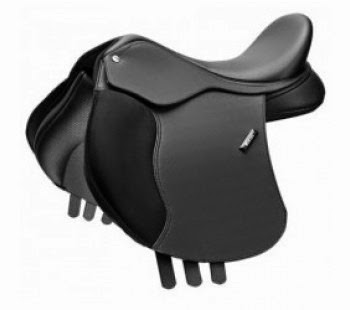
I needed a saddle though, so I bought a Wintec 500 All Purpose saddle.

Wintec 500

And oh my word, has it ever made a difference!

Copper moves much more freely over his back, which is hardly a surprise. I’m not fighting maintain my position any more, and we generally have a much more harmonious ride.  It’s much easier to get Copper to relax and soften now in his trot and I think he is generally much happier to work.

I had previously noticed that Copper had some white hairs coming up through his coat on his back – indicative of nerve damage, and the positioning of them makes sense now, because the seam where the panels overlapped would have been pressing on his back and causing pain.

I am annoyed with myself that it took me so freakin’ long to figure out that his saddle was a problem, but I am glad I did. I now know that CAIR panels have a life span of 10 years, and then they need to be replaced. They may need to be replaced sooner, but it is hard to tell that when you look at them.

Even my completely-flat-as-paper-thin panels felt firm when you poked them or touched them.  To test their actual structure, you need to turn the saddle over and massage or knead the panels with your fist for five minutes or so. If the panel is still firm, then it is ok. If it is no good you will find that it is flabby, saggy, or in the case of my saddle, has no air left in it at all.

I was so surprised when I saw that, but I finally understood what was going on and why it took me so long to work out the problem. Basically, the saddle looked and felt fine, but after five minutes of sitting in it on Copper, the air would have squished out, and the tree would have been digging into his back.

Joey would have been having the same issue, which in hindsight, explains why it was so hard for me to activate his hind quarters, and why he suddenly started to feel really funny in the canter. I thought these were all baby horse problems, but nope. The saddle was hurting his back.

Joey was a lot more stoic and had a quite a different reaction to this than Copper. He slowed down and wouldn’t work through himself, whereas Copper - while also disengaging his back end - would run around like a mad thing, pulling through his shoulders.

nop-nope-octopus - Nopederpus says it all “Nope nope nope nope – not doing this today!” -

And Bonita learns an important lesson. Even if you have checked your saddle and think it fits, think again. Even if your saddle looks fine on the outside, think again. Even if you bought a new saddle last year, think again!

Tack really is THE first place to start checking as soon as your horse starts to have ANY problems. Whether it be a change in gait, attitude, or ability to work, just check your tack! It might cost you $85.00, but it might save you years of niggling little problems that you just can’t seem to get around, but aren’t outright causing issues.

Each horse will react differently, some horses will object more than others, either way, the moral of the story is ALWAYS CHECK YOUR TACK.

This saga was bought to you by Bonita’s Duh Moment of the Year. :P

And the letter “D”….   For Duh.


See ya,

bonita

P.S. – Sorry, not sorry, for all the gifs. I never get to use these! (◉ Д ◉)

Post share buttons