Wednesday, December 4, 2013

Bittersweet


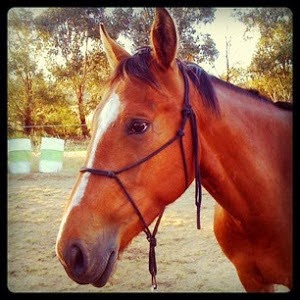
Joey at his new home

So Facebook is a wonderful and terrible invention – I’ve kept in touch with the young girl (through her mentor) who purchased Joey. I saw some pictures of him today and he looks happy. Though I am glad for news of how his doing, I have to be honest. It hurts.

Apparently, he loves the bush trail riding, he’s jumping logs, and is making a great team with his new owner. That makes me happy – I’d hate for it not to be working out for him, but ouch…

My Joey Boy

I still miss him. *sniff* It’s awful.

See ya,

bonita

Saturday, November 16, 2013

Spread a Little Sunshine


Sunshine Award by Drawn2Life 
I am so thankful for this nomination for the Sunshine Award by Karen of Bakersfield Dressage – (which, by the way, I was extremely surprised and honored when she did – I’ve been reading her blog for ages and love it) of course I’m a million years behind and everyone has already been nominated. But if you haven’t and you feel like playing along; I nominate YOU!  : )

Candylei Horse Art Oil Painting

Mares or Geldings: Geldings. Mares are too moody and frankly, that’s my job. I don’t need that from my horse, or there might just be a hormone explosion!  : P

English or Western: English. Western can be fun to do every once in a while, but dressage is my passion, so English all the way.

Do you prefer "younger" or "older" horses?  Hmm. I don’t know. All of my older horses haven’t been that old and Joey at four and a half has been my youngest horse. So I can’t really judge.

Do you prefer riding or groundwork? Riding. I like working with my horse on the ground, but well, we all love to ride right? ‘Cause that’s when we get to fly….

Have you trained a horse from ground zero?  No, but it’s on my bucket list for sure.

Do you board your horse or keep it at home? I board – well, not really. I adgist my horse in 24/7 turnout. There are no stables, no barn, just paddocks.

Do you do all natural stuff or just commercial stuff?  I like all natural when I can – I am a big fan of the wonderful treatments you can find in the plant kingdom and the like. I think that they work really well for a reason. Sometimes nature doesn’t always win though, and then I am certainly happy to borrow someone’s brain and use the products that were invented to deal with things that nature can’t.

All tacked up or bareback: I love bareback for fun, but prefer to be tacked up. I feel like I have more freedom to try different things when I’m in the saddle.

Equestrian model?  No one in particular. I’m not really up on the equine sport news. Although I quite admire Mark Rashid for his horsemanship and I think very highly of Mugwump’s down to earth and thoughtful training techniques.

What's your one, main goal while being in the horse world? To improve and bring out the best in whatever horse I am working with. If one day I happen to be able to train up to Grand Prix dressage while doing that, I shall be a very happy equestrian. ; )

See ya,

bonita

Tuesday, November 5, 2013

Help! My horse is herd bound!


I’ve been thinking and reading, reading and thinking, and after five or so years of riding Copper I have finally connected all the dots – my horse is extremely herd bound.

The reason it’s taken me so long to pick this up is because he doesn’t exhibit the typical behaviors you’d expect in a herd bound horse – behaviors that Joey showed.  Copper doesn’t whinny longingly or loudly, he doesn’t refuse to go out on trail rides alone, he doesn’t pace around looking for his herd, or anything like that. 

But last night I had an epiphany – Copper’s herd bound-ness manifests itself in different ways.

1. He always drags his feet when you go to catch him and bring him in from the paddock. He has the slowest walk ever; he’s coming, but he will move like molasses on a cold day. He always has the grumpiest face while you bring him in, groom and saddle – in fact the only time he doesn’t look cranky while you have him out is when you feed him.  Naturally. 

I have checked his bridling, his saddle, his feet – I don’t think he is in pain, and for me, the biggest indicator is that it isn’t pain related is that his gear has been changed and refitted over the years, but his behavior hasn’t changed. It’s gotten worse.

I could be wrong about the pain thing, but I am always looking out for that, and I think the problem is bigger than that.  I think it’s a mental thing. Pain problems are easy to solve, mind problems are not.

2. He races under saddle. He has always been like this. The minute you hop into the saddle he is off, off and away! He doesn’t like standing still for mounting, he wants to run/trot as fast as he can whether you are trail riding with other horses or alone, or schooling in the arena, or jumping – whatever you are doing in the saddle, Copper is fast.

In the past I attributed this speed to his racing history.  He was trained as a trotter for at least six years (he was foaled in Sept, 2000 and his last registered race was 2006), and that sort of conditioning will impact a horse’s personality. So I assumed that he just like racing and running.

Now? I’m not so sure. I think that Copper is simply trying to get the riding over as fast a possible so that he can run back to his herd.

3. He likes to bolt off when you un-halter him in the paddock. This didn’t used to be the case; after I leased him out and got him back unexpectedly, he started this habit. Previously, he’d just amble back to wherever the herd was, but now 90% of the time he’ll take off at a gallop.  I turn him to toward the fence and get him to tuck his nose in and down towards me when I slip the halter off, but he is really good at turning on a dime and – excuse the French – pissing off like a bat outta hell.

These are the three main reasons I have come to the conclusion that he is, in essence, herd bound.

What do I do?

I don’t think it is my riding – I am willing to admit that we have had our share of struggles. I have really had to adjust my riding so that I am not pulling on his face, and I try very hard to control his speed with my seat.

We have been working together a lot better than previously – I have been using lateral work to switch his mind from “Charge! Forwards ho!” to “Oh, I have to think about which foot goes where.”  This has been working really well for calming him down and slowing down his trot and canter without hanging on to his face.

BUT if the underlying problem is not just “Speed is fun!  Whee!” like I thought it was, then all of these techniques aren’t really addressing Copper’s main problem.  He doesn’t feel safe away from his herd and he does NOT enjoy riding, like I thought he did.

Oh help. I guess I’m going to have to do a lot more reading and thinking, because I haven’t the foggiest clue how to go about reaching Copper and changing his mindset.

I don’t know if ground work is the answer, or maybe riding him out on trail rides and dismounting and feeding him in the middle of the ride? I really don’t know what to do at this stage, but I’m not giving up on trying to find a solution.

See, in the end, I think that Joey and Copper actually have/had similar problems. But Joey was at least willing to communicate and reach out, whereas Copper is very shut off. How do you open up lines of communication when your horse doesn’t want to talk to you? How do you begin to show them that work is good and fun and safe?

So many questions that I don’t have the answers too… I think I’m going to write a letter to Mugwump.  I need help.

See ya,

bonita

Thursday, October 31, 2013

SOMEthing is happening -


Or more accurately, some muddle is happening!

My ride on Copper today was productive, I think… I don’t really know, as I can only go off what I feel, but because I’ve only read about the results I want, and never actually ridden them, how am I supposed to know?

What we worked on:

Warm up - I let him pick the direction, the pace and gait, and only used contact to steer to keep him in the arena as it is not fenced, just denoted by poles on the ground.

Trot – Me; trying to deepen my seat and practice my half-halts. Him; shoulder-ins and leg yields at the trot as well as some figure of eights thrown in for good measure.

Canter – Me; suppleness through my shoulders, arms and wrists; activating my seat at a canter, rather than just sitting and moving with it. Him; balance, rather than racing to maintain the gait.

What it felt like:

Warm up – Copper loved this bit, what horse wouldn’t? (Well – not quite, Joey would just mooch) He chose the right rein and powered around in an explosive, fast trot.  He would slow down for the corners, but yeesh. It was messy.  I just focused on keeping up with him and staying balanced. The reason I decided to do this is because a trainer that I greatly admire, Mugwump, is great believer in getting off a horse’s face and letting them figure it out.  By all means, steer with the reins, do your figures, but keep out of their face.  The more you can do that, the less charge-y and pull-y they will be.

I think I might need to try this a few more times before Copper gets the hang of it, his first and only thought was “Yay! Running!”  After a while he seemed to calm down a wee bit, and I do mean wee, so I thought it was time to pick up contact again, and do some ‘proper’ work.

Trot – Me; I was trying to deepen my seat, but avoid the pinch-y thigh problems that can occur when you are trying to change your balance or keep up with the horse’s movement. This meant that I would open my hips and thighs, apply a little calf and gentle resistance on the reins to do my half halts. 

It felt weird to say the least. I could feel my seat bones drop into the saddle, and that was good, but pulling my thighs open to achieve that felt messy. It could be that I’m not used to the motion yet.  I have found that when you start trying new positions in the saddle, or new aids you don’t know, they almost always feel messy at first – even if they are correct. Or, it could be that I don’t need to swing my knees out so much when I am trying to open up my hips.  I shall have to experiment.

Copper; still felt excited and charge-y.  I wanted his energy to be ‘up’ but I don’t think he has the muscle strength to lift up his neck and head in proportion to his impulsion – so he had to go forwards, or else he would drive himself onto his forehand. (Much like Joey used to do.) I would half-halt and he would respond and drop his croup, but as soon as I released the resistance on the reins with the next stride, he would just explode forwards, because, I am guessing, he was unable to contain his energy.

I would fall behind his movement, and then have to rebalance, and I think it would’ve looked as messy as it felt. But we did do our shoulder-in and leg yields at a trot and those were actually the best thing for gathering him up under himself.  He certainly had plenty of impulsion! He doesn’t like circles now as they are too ‘hard’ for him in his new frame so he’ll shoulder-in out of them to avoid them.

I had to put a kibosh on that, but between all my seat/position struggles I figured it would be best to work on something that he was willing to do.  I actually got an extended trot out of him – I just half-halted, and let him power on.  He just flew! I started to get a sore back from having to work so hard at sitting his trot, so then we moved to canter.

Canter – Me; I was chanting “Supple, supple, supple” to myself, working on relaxing my shoulders and wrists, and rolling my seat up and back to activate it and control his gait.

Copper – a bit unbalanced at times, but he had some very nice moments. I only worked him on the right rein so that we could have plenty of time to warm down. As his canter is so much easier for him than his trot, I always need to go back to trot work afterwards to get him back to thinking about it.

His trot was still very energetic afterwards, but I could feel that his hind legs were reaching further underneath himself, so that is something to think about.  Maybe moving the canter work to after the warm-up, rather than somewhere at the end/middle of our training session, would be beneficial to him? It might help with the excess energy as well. 

Overall impressions – I think we are on the right track. One moment particularly stood out for me; we were working at a trot, I half-halted and released, and he stayed balanced and collected even when I moved the reins forwards to drop the contact.  He was showing true collection! It only lasted like two or three strides before he started to speed up, but it was there. 

I’d like to take that as conformation that we are heading in the right direction, even with all this muddle!

See ya,

bonita

Wednesday, October 23, 2013

Facing fears – humans and horses working together


I was out on a trail ride the other week with Copper (It isn’t often that I go down to the horse yards without Isabelle and when I do it’s time to hit the trail!); and we met a ‘monster’ in the form of a mini dirt bike.

At first I was surprised at Copper’s reaction – I thought he’d be ok with them as he is ok with traffic, but maybe he didn’t expect to see it.  Anyway, it wasn’t going – thank goodness for that! – as it had broken down. There were four young men fussing over it on the side of the track.  When it came into view, Copper stopped and grew very, very tall.  I could feel his hunches dip and I knew instinctively that if anything got much more scary he would spin and bolt for home. So I twisted my fingers into a chunk of his mane, and called out to the blokes “Please don’t turn that bike on until we are well away from you!”.

Then I sat quietly. Copper started to walk forwards all tremble-y and snort-y. I felt him hesitate and encouraged him just a little by swinging my right seat bone forwards.  Only a little nudge with my seat, nothing more!  He gave the bike a wide berth and then walked away, still ready to run, but much happier now that it was behind him.

When we were 20-30 meters down the track he finally let out his breath and felt quite proud of himself!  It was rather cute. 

Copper is funny though, he’s at the bottom of herd hierarchy, but he doesn’t look to humans for leadership hardly at all.  Whereas Joey, although he was high up in the herd (second or third I think), would turn to me for guidance.

One time Joey’s trust in me was really pressed home.  I had turned him out in the small paddock that our dressage arena was in to get some grazing while I worked Copper.  He was jumpy – it was a windy day, Copper and I were in the pens a couple of meters away and he hadn’t been turned out in that area before, although we had ridden in it plenty of times.

To top it all off, a ute appeared out of “nowhere” and I could see that it had caught Joey by surprise and freaked him out.  He stood by the fence, high-headed and wide eyed, ready to run.  I called out to him – the usual soothing noises “Steady Joey, easy boy”, wondering if I needed to go over there and reassure him. 

Then he looked at me, and I could read his mind.  “Is it ok?”  he asked – clear as day.

I said, “It’s ok boy, steady”  and he just stood there, holding my gaze with wide eyes, the whites showing, while the ute bumped and bounced past him and down the bottom of the jump paddock to disappear out on to the dirt driveway we drive in on.

Then the spell was broken and he went back to grazing whilst I saddled Copper.  I had goosebumps on my arms.  That was the second time Joey and I had ‘clicked’, when we had been on the exact same wave length. 

(I so wish I hadn’t had to sell him! *sniff*)

He’s the only horse I ever remember doing that with.  I’ve been able to understand what my other horses have been saying to me, but he’s the only one where it’s been like we can read each other’s minds.

Did he trust me more than Copper does?  Or was he more willing to try and communicate more clearly?

I’m thinking about this, because comparing the two stories, well, it’s two very different experiences.  Copper, in that scary situation on the trail, did the job himself.  Yes, I did encourage him, but he basically took the situation in his own hooves, as it were, and did it himself.  I didn’t feel like we were a team at all, he was not looking for guidance from me. 

Joey would do the same thing sometimes, but in situations that were really crucial – ones he felt like he couldn’t manage or didn’t understand, he would refer to me.

Was it because he ultimately trusted me more, or because of his personality – being a different kind of horse, with a different background?

Copper is a willing partner, but he doesn’t give any kind of input.  He’s just there to work, in a way.  Is it asking too much to want more?

I don’t know, but I do know what can be achieved now, and maybe one day I’ll find another Joey, and hopefully it will be the right time for us this time!

See ya,

bonita

Wednesday, October 16, 2013

Dissecting the Seat – Part 2: The Sitting Trot


In this series on dissecting a rider’s seat, I’m looking at a lot of different texts and articles to try and decipher the principles and practice of the classical dressage seat.  This is concerning the sitting trot with an article from the Thoughts on Dressage blog.

The sitting-trot wizard: attaining the golden seat

Executing an effective and comfortable sitting trot is probably the most difficult challenge faced by amateur dressage riders. For most, it is hard to get your body in sync with the horse while still riding effectively. It is like the old hot and cold taps, where you can only have one or the other on at one time. : )

The biggest mistake made by most amateurs is that they try to learn the sitting trot in one step. In other words, they try to go from not even being able to get in the rhythm  - all the way to being in perfect sync with the horse. Many riders try methods such as riding half a circle sitting and then back to rising, or another favorite, being lunged with no stirrups. Unfortunately, a lot of these traditional methods cause the rider to clamp up even more and give the horse a bruised back. Not ideal.

I propose a phased approach:

Phase one: Sit heavy

Before you can have the perfect sitting trot, you as a rider need to learn how to put weight in the saddle. I know many instructors say not to sit heavy like a sack of potatoes as it will not help your horse’s animation. Although this is true, I believe that UNTIL you can learn to sit like a sack of potatoes you will never learn to properly sit the trot. Many riders hover in the saddle and kind of do a fake sitting trot, which looks stilted and awkward. Technically, they are sitting on their seat bones and pinch with the knees. In order to keep the balance with this configuration their seat has to be tense and their pelvic floor raised. It is actually quite an unstable way of riding and it astonishes me that so many riders opt to stick with this method of riding. Clearly, it does take more time and strength to ride a proper sitting trot, but I believe the extra bit of effort is well worth it.

But back to sitting heavy… If you’ve gotten to the point in your riding that you either want to finally learn a proper sitting trot or would like to try sitting trot for the first time than you need to start at phase one. The basic instructions are as follows:

1. Go into a slow trot from a walk
2. Don’t TRY to sit the trot, instead focus on feeling your pubic bone and seat bones as the three point contact in your saddle
3. Once you feel your points of contact, make sure you are sitting up tall and let your full weight rest on these three points.

It is important to keep your horse slow during phase one. Again, the advice many of us get is to keep “riding the horse”. But you must be realistic. At this stage, no matter how much better it would be for you to school your horse while trying to learn the sitting trot, it isn’t going to happen. Your best bet is to let your horse go nice and slow and if possible let them have a soft long contact where they are stretching for the bit. This stretch will help lift their back, which will make it easier for you to sit. Many will feel that they look ridiculous mincing around, sitting like a sack on their horse. You must ignore this for now. You must get used to the idea of allowing your full weight to sit on your three points and by doing so your pelvic floor will relax and lower, which is essential before moving to phase two. Practice your sitting trot near the end of your ride when you and your horse are warmed up. Don’t move on to the next phase until you feel like you’ve had success here first.

Phase two: Animate your seat

Once you feel like it is second nature that you are sitting on your seat bones and your pubic bone rather than putting your weight on your seat bones and knees, you are ready for phase two.  The instructions are as follows:

1. From a walk ask your horse to go into a slow trot
2. Sit heavy as you did before with your three point contact
3. This time you are going to tilt your pelvis (think of a speed boat as it takes off, or if you do yoga think of warrior pose ed: or you can think of sitting on a ball and rolling it forwards with your butt!)
4. Now shut your eyes for a moment and feel the rhythm of the horse, count in your mind the trot steps 1-2-1-2-1-2
5. With your tilted pelvis I want you to animate your seat, not back to front but in little pelvic pushes forwards
6. As you do so you will notice you don’t feel as heavy in the saddle, but the weight that is still there should still be resting on your three points
7. this is the critical piece of phase two – STAY IN FRONT OF THE MOTION. If you try to keep the rhythm of your seat with the horse’s gait you will always be a bit behind the motion. In your mind, you must attempt to stay in front of the motion, what you will accomplish instead is that you will just be in sync. A good example to demonstrate what happens when you are behind the motion can be found when using a trampoline. Have you ever heard the term, stealing someone’s bounce? This happens when you are bouncing on a trampoline with a friend at the same time and one of you slightly bounces just after the other, the first bouncer gets a dead tramp and instead of bouncing high doesn’t go anywhere. This is what happens to your horse when you are behind the motion. You steal his bounce and you as the rider get bounced even higher.

Phase three: Lift

Most riders don’t get past phase two, but if you want to help your horse reach collection you will need to move beyond it. If you keep practicing, you can have a pretty decent position riding in phase two and feel reasonably comfortable at the sitting trot. Phase three is all about helping your horse out, where phase two is about trying not to interfere with your horses motion. In phase three, the idea is to use your seat and body to help animate your horse. Every time your horse lifts his back (and if you were posting you would be rising), you, the rider also actively lift your seat to help the horse get the maximum animation possible for that stride.

The instructions are as follows:  At this point, you are very comfortable in phase two and are in perfect sync with your horses movement. You are not interfering with their gait and you are able to stay in the sitting trot for an extended period of time. As you begin to enter phase three you will make the following changes to your approach and position.

1. Instead of simply doing the pelvic pushes to stay in sync you will now sit even taller in the saddle and actually lift your body straight up during the rise stage of the gait as though someone is pulling you upwards by your helmet.
2. As you work through this change you will notice that you feel like you are almost bouncing in the saddle, don’t be alarmed this is normal
3. you will also notice after a while that you almost feel like you are – in a sense – standing in your tack and getting more stability from your upper inner thighs than your seat, this is also normal.
4. Ultimately, you will be able to aid your horse, providing them with more balance and lift than they would offer without a rider – when this happens you know you’ve attained phase three.

I intend on trialing this process and working on improving my sitting trot seat – I will let you know how it goes!

See ya,

bonita

Tuesday, October 8, 2013

Things I have learnt - Joey


IMG_0854 
Thinking about my boy tonight and being grateful for the journey we had together.  He taught me many things:

1.  He taught me to be a better rider – I had to learn to be precise with my aids. I had to set him up to succeed.

IMG_2572_1024

2.  He taught me to secure my seat… :P

IMG_1750

3.  He taught me that forwards is the best answer for misbehavior – by the end there was less spooking, less prop-and-whirling, less bucking; all brought on by allowing him to move forwards when he felt like something was scary or too much to deal with.

IMG_2012_1024

4.  He taught me to be aware of my pelvic floor muscles and how they affect my seat; one of my biggest AHA! moments this year.

IMG_1047

5.  I learnt how much a horse can rely on you and trust to you lead the way.

IMG_1990_1024 

6.  He taught me that I can ride and train a young horse, but it takes a lot of work!

 IMG_1113_1024

7.  He taught me that even when I am ‘paralyzed’ with fear, I can actually ride through it without it affecting my riding too much.

IMG_1610

8.  He taught me that ground work is crucial – if your horse listens to you in hand then he is far more likely to listen to you under saddle!

IMG_1936_1024

9.  He taught me how much fun it is to have a smart horse; and how hard it is to keep their brains active.

 IMG_1061_1024

10.  He taught me that if you push too hard, accidents will happen – you have to learn when to work through it and when to stop.

IMG_1076_1024 

But mostly he showed me how a horsey partnership can be – yes, we had our ups and downs, but we also connected.  And that connection is something I will always cherish. 

 IMG_1787

Copper and I are developing our relationship further, and I am enjoying that; but they are different horses.  Sometimes I still miss Joey. 

See ya,

bonita

Post share buttons